Installing solar panels is a major investment for homeowners in the United States. A typical residential solar system can cost $15,000 to $30,000, so protecting that investment is important. One common question homeowners ask is whether solar panels require special insurance coverage.
The good news is that in most cases, solar panels are already covered under standard homeowners insurance policies. However, the exact coverage depends on how the system is installed, who owns it, and what risks your insurance policy covers.
This guide explains how solar panel insurance works, what is covered, what is not covered, and how homeowners can make sure their solar investment is fully protected.
Do Solar Panels Need Separate Insurance?
In many cases, homeowners do not need a separate solar panel insurance policy.
Most insurance companies treat solar panels as a permanent improvement to the home, similar to a roof upgrade or home extension. Because of this, roof-mounted solar panels are typically included under the dwelling coverage section of a homeowners insurance policy.
Dwelling coverage is the part of a home insurance policy that protects the structure of the house from damage caused by covered events.
If your solar panels are permanently attached to your roof, they are usually insured the same way your roof or walls are.
What Solar Panel Insurance Usually Covers
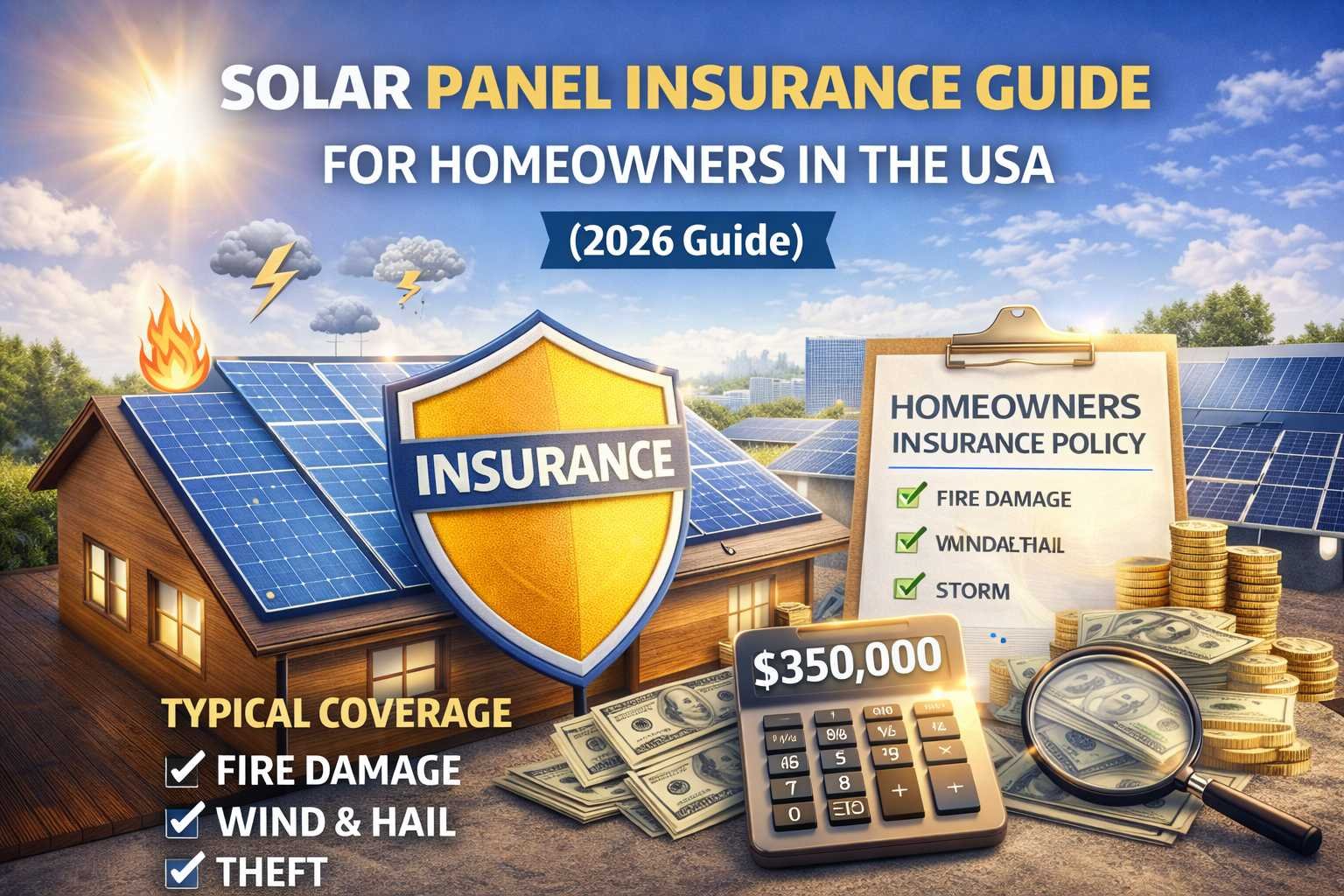
Homeowners insurance policies generally protect solar systems from several common risks.
Typical covered events include:
Fire damage
Lightning strikes
Hailstorms
Windstorms
Falling trees or debris
Vandalism or theft
If one of these covered events damages your solar panels, your insurance policy may pay to repair or replace the system, subject to your deductible and coverage limits.
Some policies may also cover electrical faults that lead to fire or damage within the solar system.
Rooftop vs Ground-Mounted Solar Panels
Insurance coverage may vary depending on where the solar panels are installed.
Rooftop Solar Panels
Panels mounted directly to the roof are typically considered part of the home’s structure.
Because of this, they are usually covered under the dwelling coverage portion of a homeowners insurance policy.
Ground-Mounted Solar Panels
Solar panels installed on the ground or on separate structures (like garages or carports) may fall under other structures coverage instead of dwelling coverage.
This coverage often has lower limits, so homeowners may need additional insurance riders to fully protect the system.
What Solar Panel Insurance Does Not Cover
While homeowners insurance offers protection, it does not cover every type of damage.
Common exclusions include:
Normal wear and tear
Poor maintenance
Manufacturing defects
Improper installation
Gradual deterioration
Pest damage
Damage during installation may also not be covered because the contractor’s insurance typically handles that risk.
This is why it’s important to choose a certified solar installer with proper liability insurance.
Do Solar Panels Increase Home Insurance Cost?
Solar panels may slightly increase homeowners insurance premiums.
This happens because the solar system increases the replacement value of the home, meaning insurers must cover a more expensive structure.
However, the cost increase is usually small.
Many homeowners report paying about $20 to $50 more per year to insure their solar panels depending on system size and coverage limits.
What Happens If Solar Panels Are Leased?
If your solar panels are installed through a solar lease or power purchase agreement (PPA), the situation may be different.
In many cases:
• The solar company owns the panels
• The solar company insures the equipment
• Your homeowners insurance only covers roof damage or structural issues
Leased systems are typically insured by the solar provider rather than the homeowner.
Always review the lease agreement to understand who is responsible for insurance coverage.
Manufacturer Warranty vs Insurance
Solar panels usually come with manufacturer warranties lasting around 20–25 years.
However, warranties and insurance cover different risks.
Manufacturer warranties usually cover:
Defective panels
Equipment failure
Performance issues
Insurance typically covers:
Storm damage
Fire damage
Theft
Accidental damage
Using both warranty protection and insurance coverage ensures complete protection for the system.
Tips for Homeowners with Solar Panels
Before installing solar panels, homeowners should review their insurance policy and ask their insurer several important questions.
Helpful steps include:
Inform your insurance company before installation
Confirm coverage limits include the value of the solar system
Ask whether inverters and batteries are covered
Check deductibles for storm damage
Verify coverage for ground-mounted systems
Updating your policy ensures there are no gaps in protection.
Is Solar Panel Insurance Worth It?
Solar panels are a long-term investment that can generate electricity for 25 to 30 years. Because they are exposed to weather, protecting them with proper insurance coverage is essential.
For most homeowners in the United States, the good news is that standard homeowners insurance already provides adequate protection for rooftop solar panels.
By reviewing your policy and ensuring your coverage limits reflect the value of your solar system, you can protect your investment while enjoying the benefits of renewable energy.
Final Thoughts
Solar panel insurance helps homeowners protect one of their most valuable home upgrades. In most cases, solar panels are covered under the dwelling portion of a standard homeowners insurance policy, protecting them from risks like fire, storms, and theft.
However, coverage varies depending on installation type, ownership, and insurance provider. Reviewing your policy and confirming coverage details ensures your solar energy system remains fully protected for years to come.